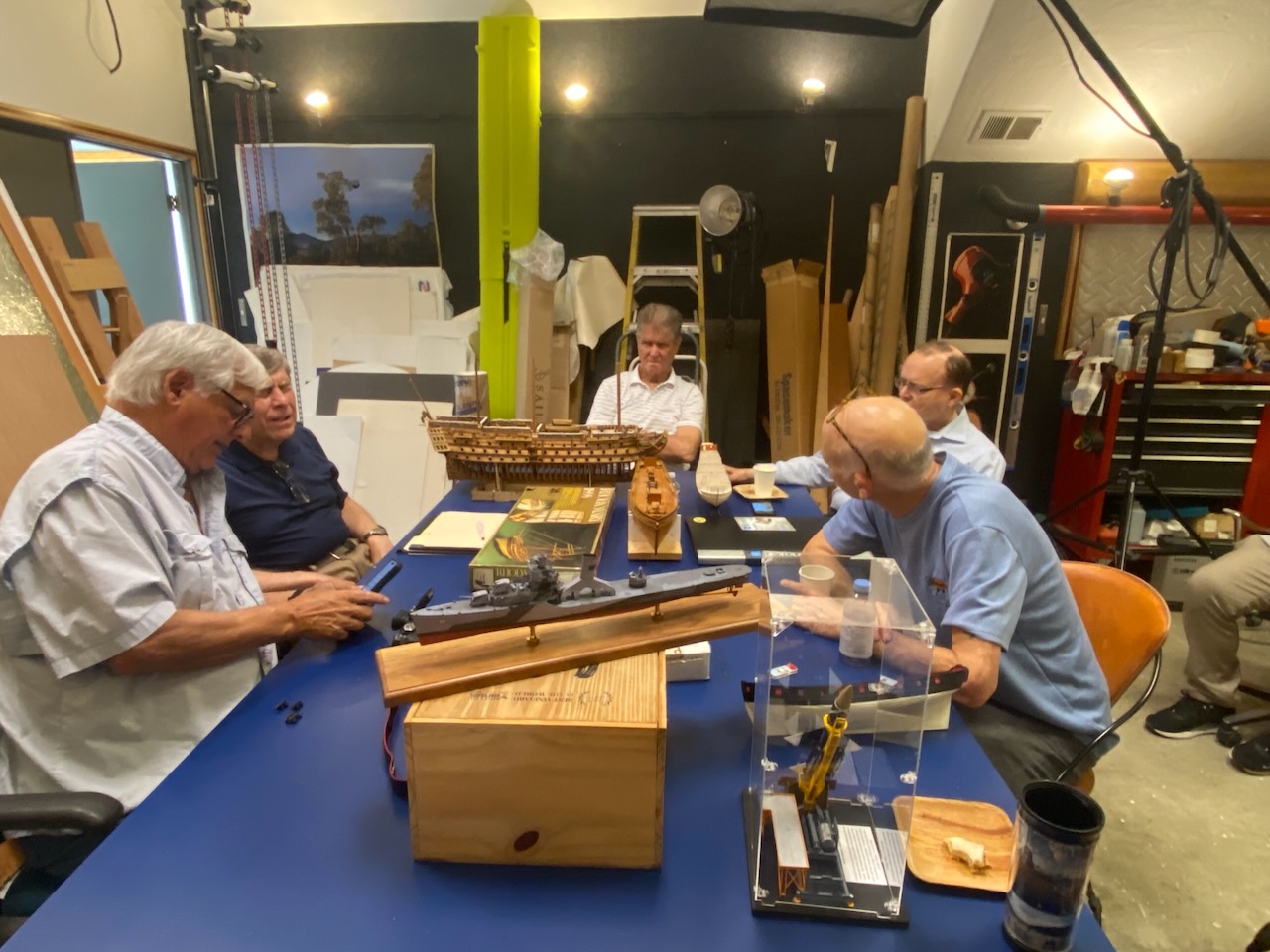
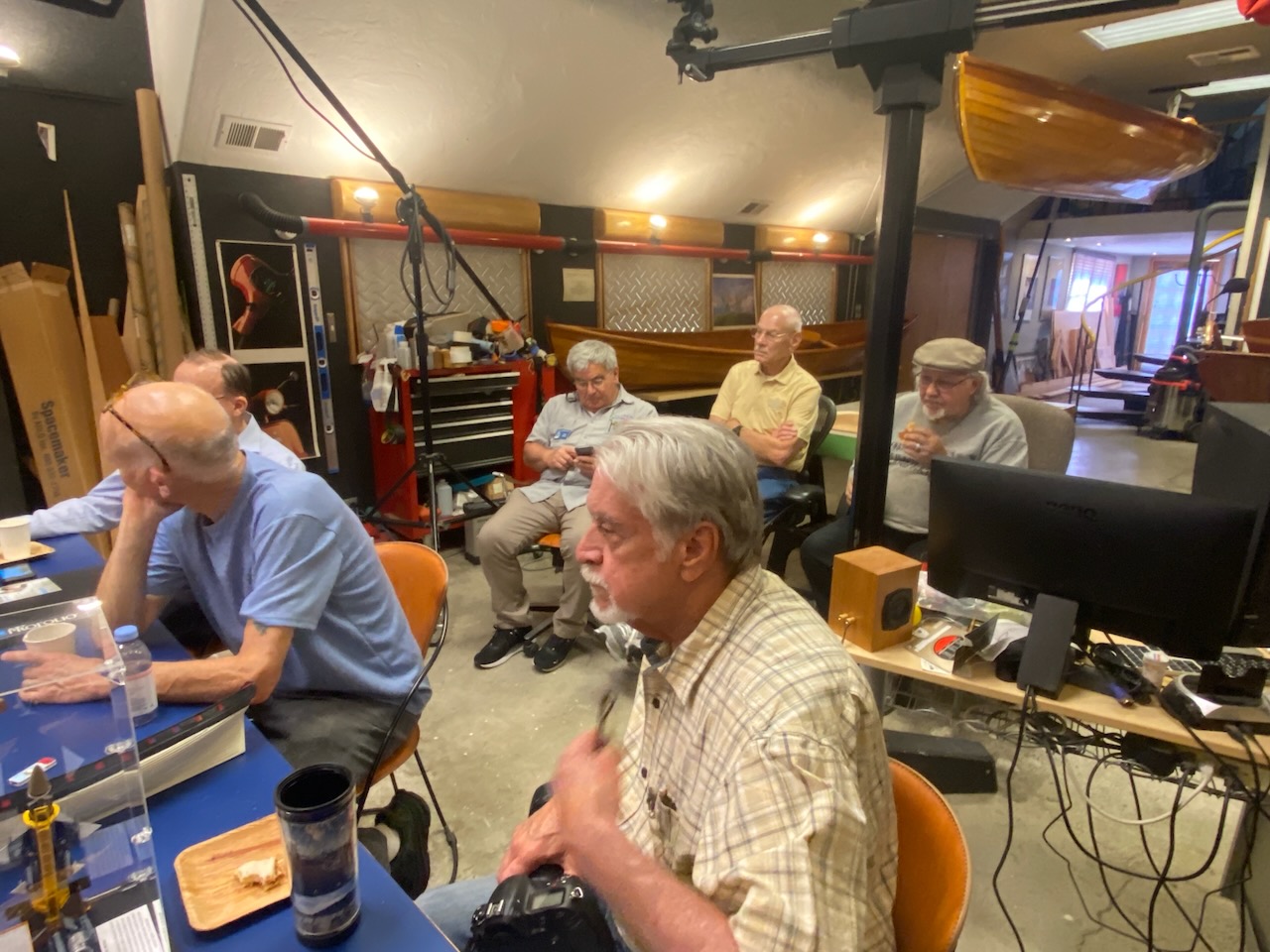
Our May meeting was the second meeting that we’ve held at the workshop of member Dave Monley. The meeting was well attended, with 11 members present.
The showing of models began with a model by Clare Hess, his current paper model project, the 1/200 scale US Navy destroyer USS Bagley, a kit from the Ukrainian paper model publisher Avangard. This model was officially started at the beginning of December.
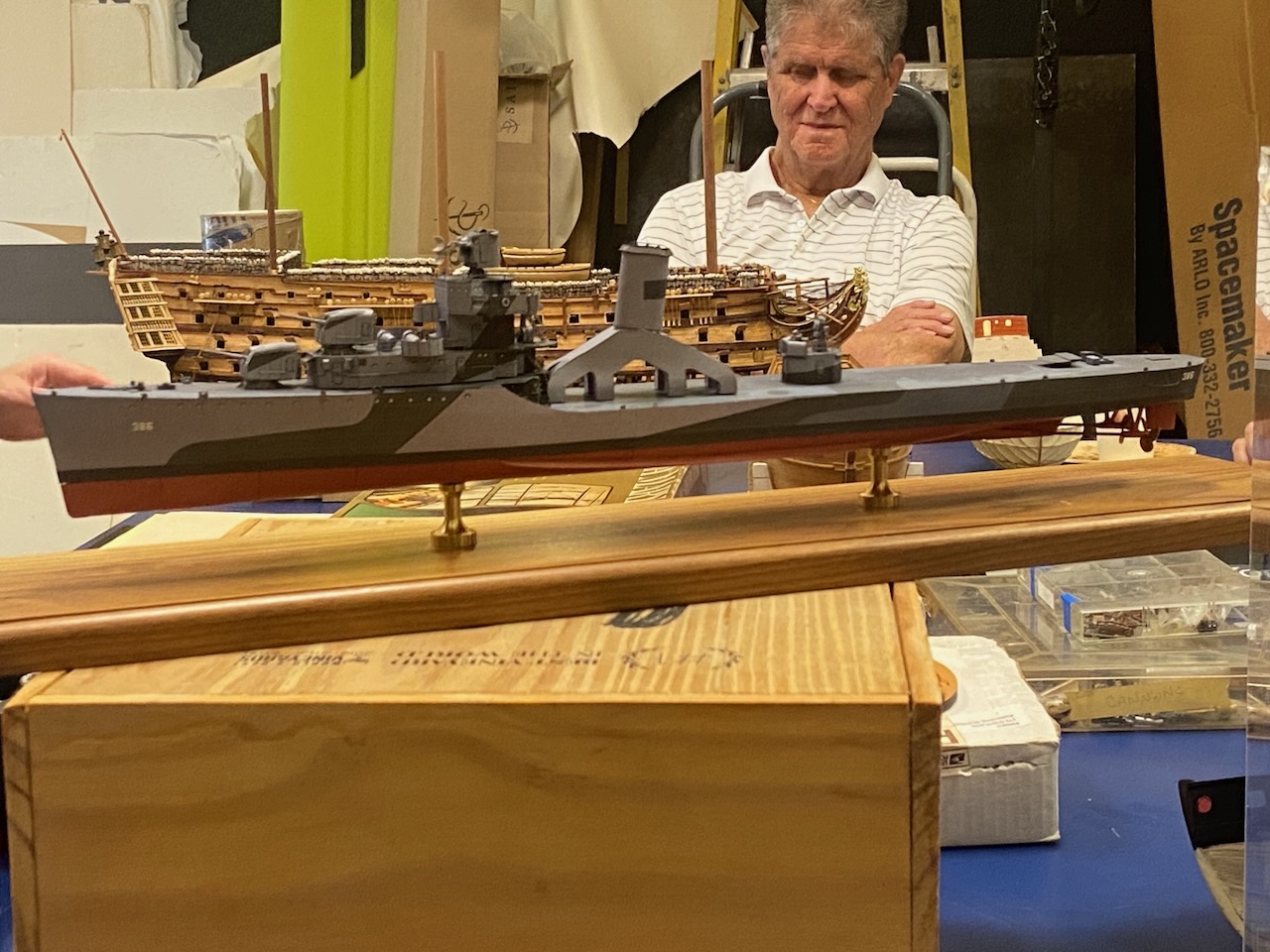
The model showed some of the superstructures in place, but most of that is not permanently glued to the deck yet. He discussed how he managed to repair some battle damage to the hull using overlays he printed from earlier scans of the kit’s parts sheets.
The second model, also by Clare, was a model built several years ago of a 19th century Japanese fishing boat he built from scratch in 1/72 scale. The model was based on drawings made by French officer Armand Paris back in the 1880s.
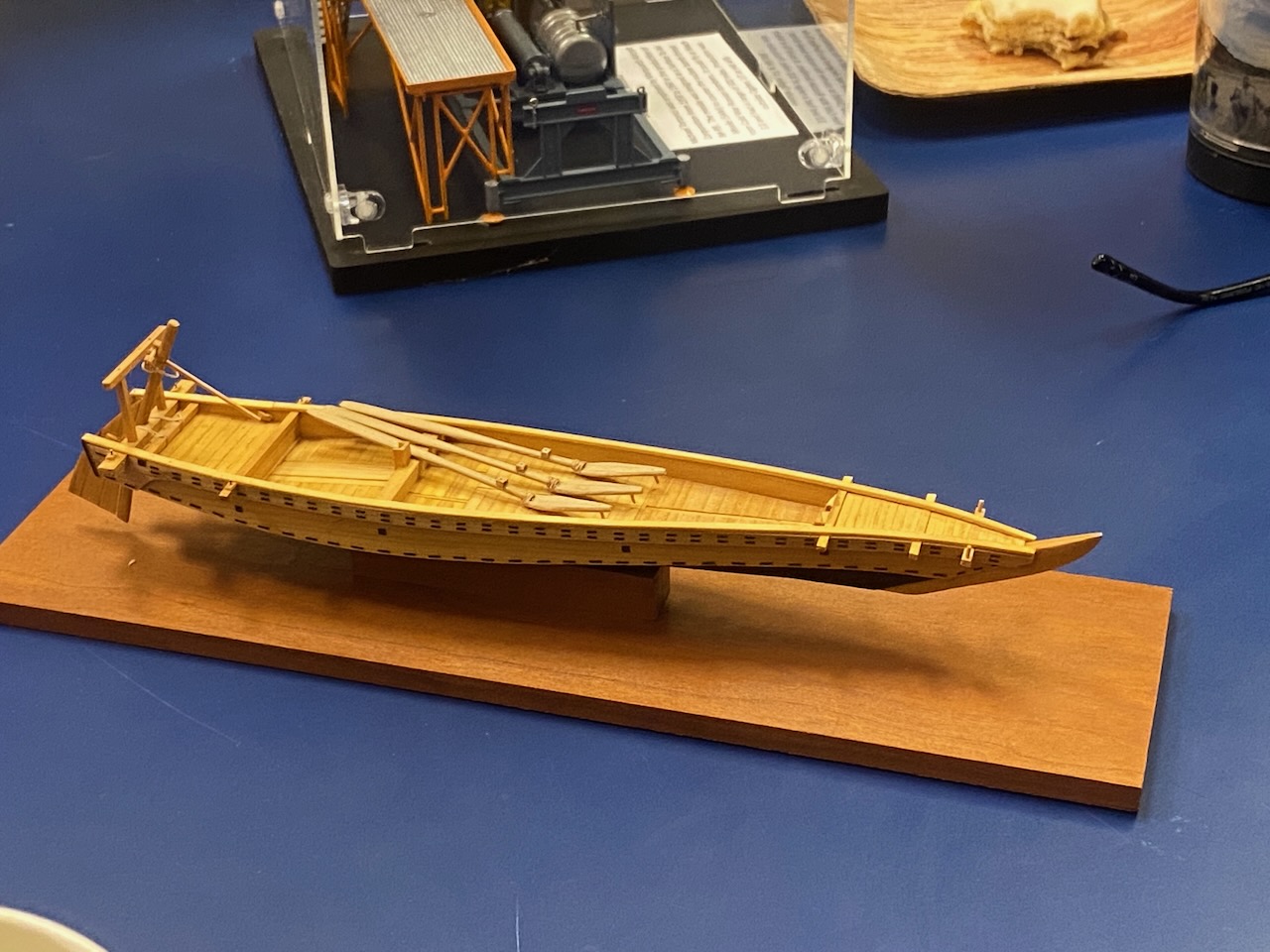
There was some question about how the patterns along the hull were made using a computer-driven vinyl cutting machine and adhesive-backed vinyl, which was used not only to cut the tiny rectangles, but to also position them evenly.
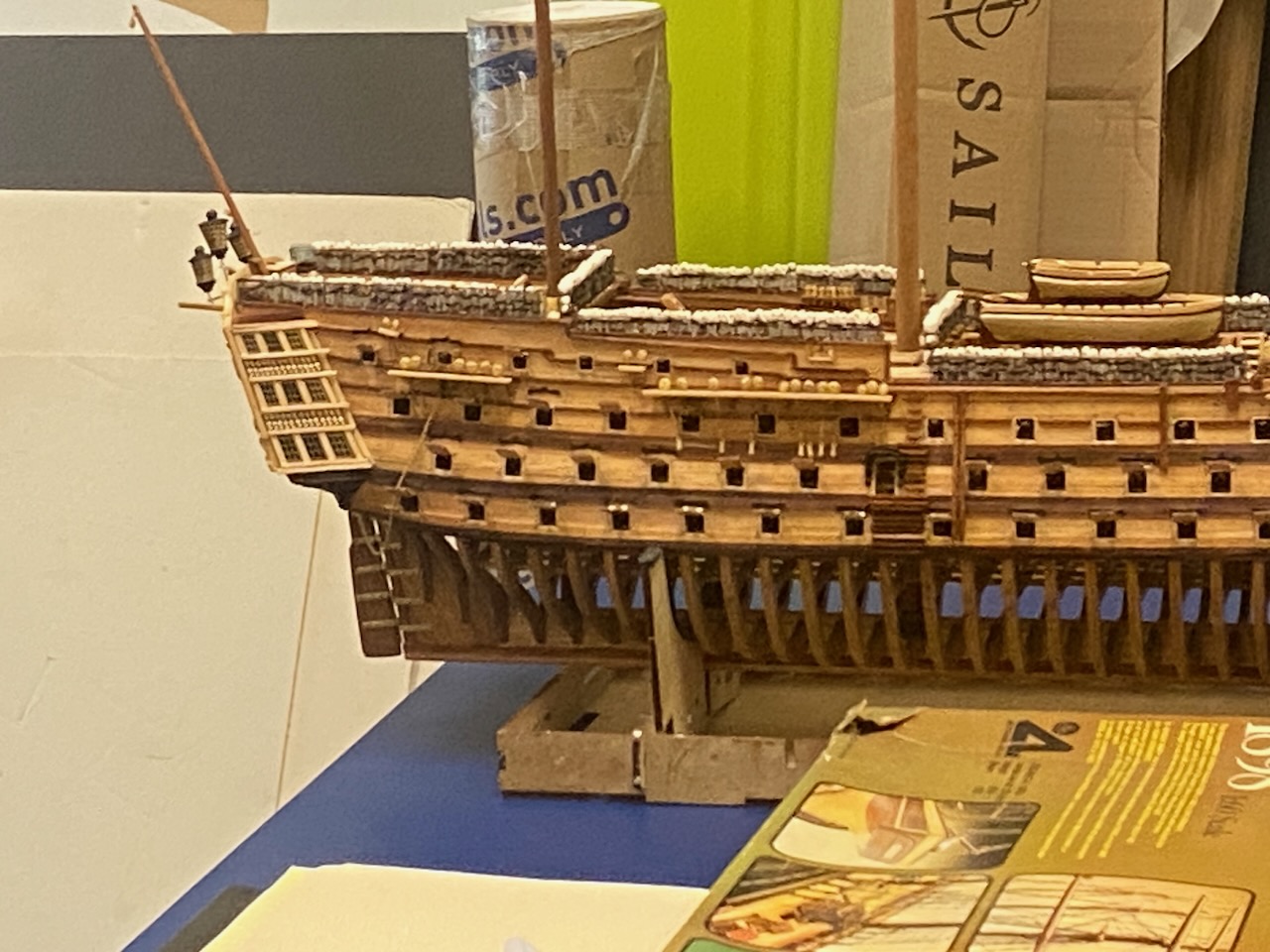
Vince Lepore then showed his latest progress on his open-hulled model of HMS Victory, a limited edition kit from the Spanish wooden model kit manufacturer, OcCre. He told us how he had decided to purchase the kit, but production of the limited-run kit had ended, and so he couldn’t buy it from the manufacturer. However, he found a retailer that had one left, which he immediately bought.
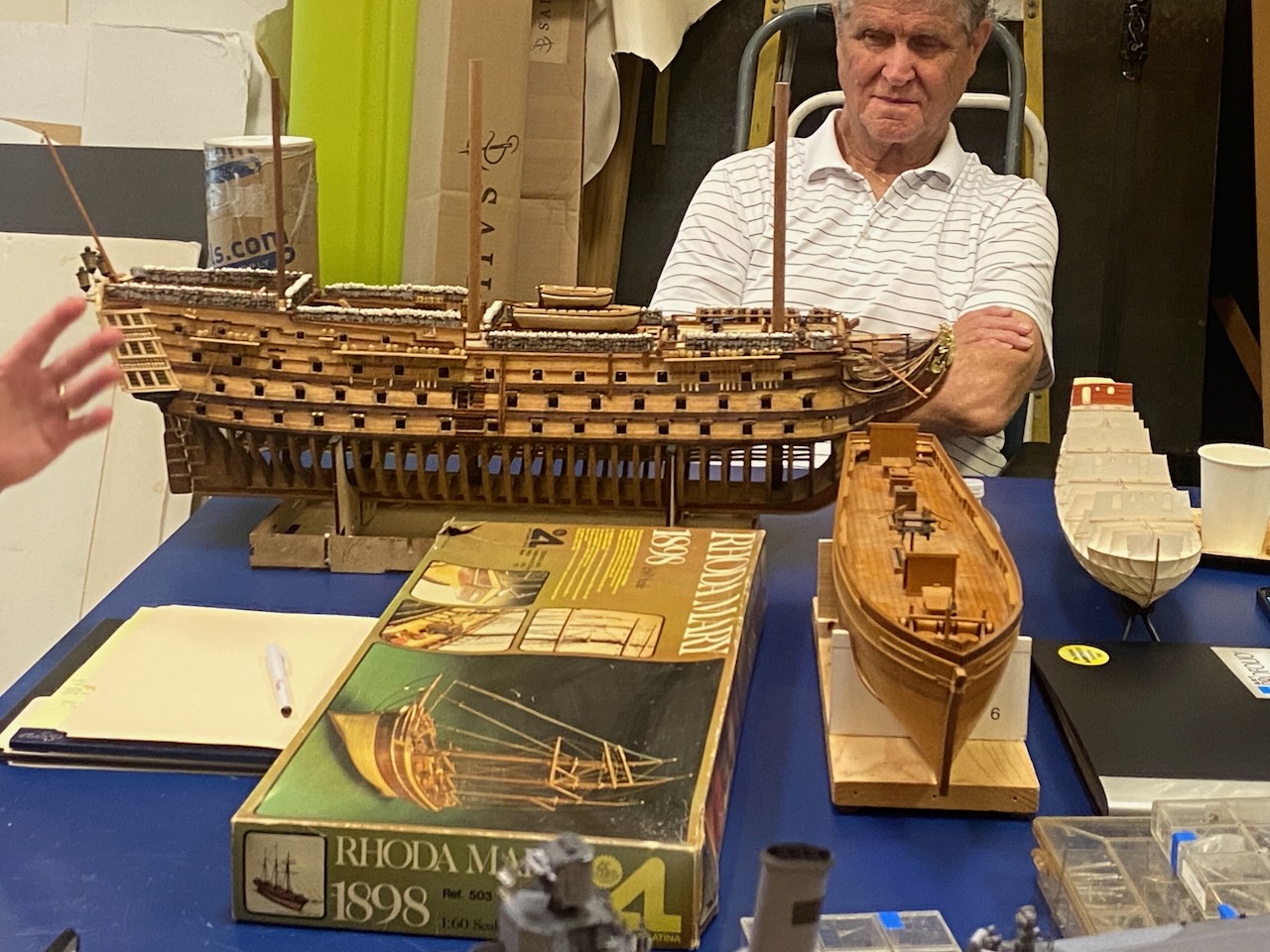
Vince explained how placing the deck beams during construction was a challenge, since it affected the placement of the cannons and gun ports, as well as the critical alignment of the masts.
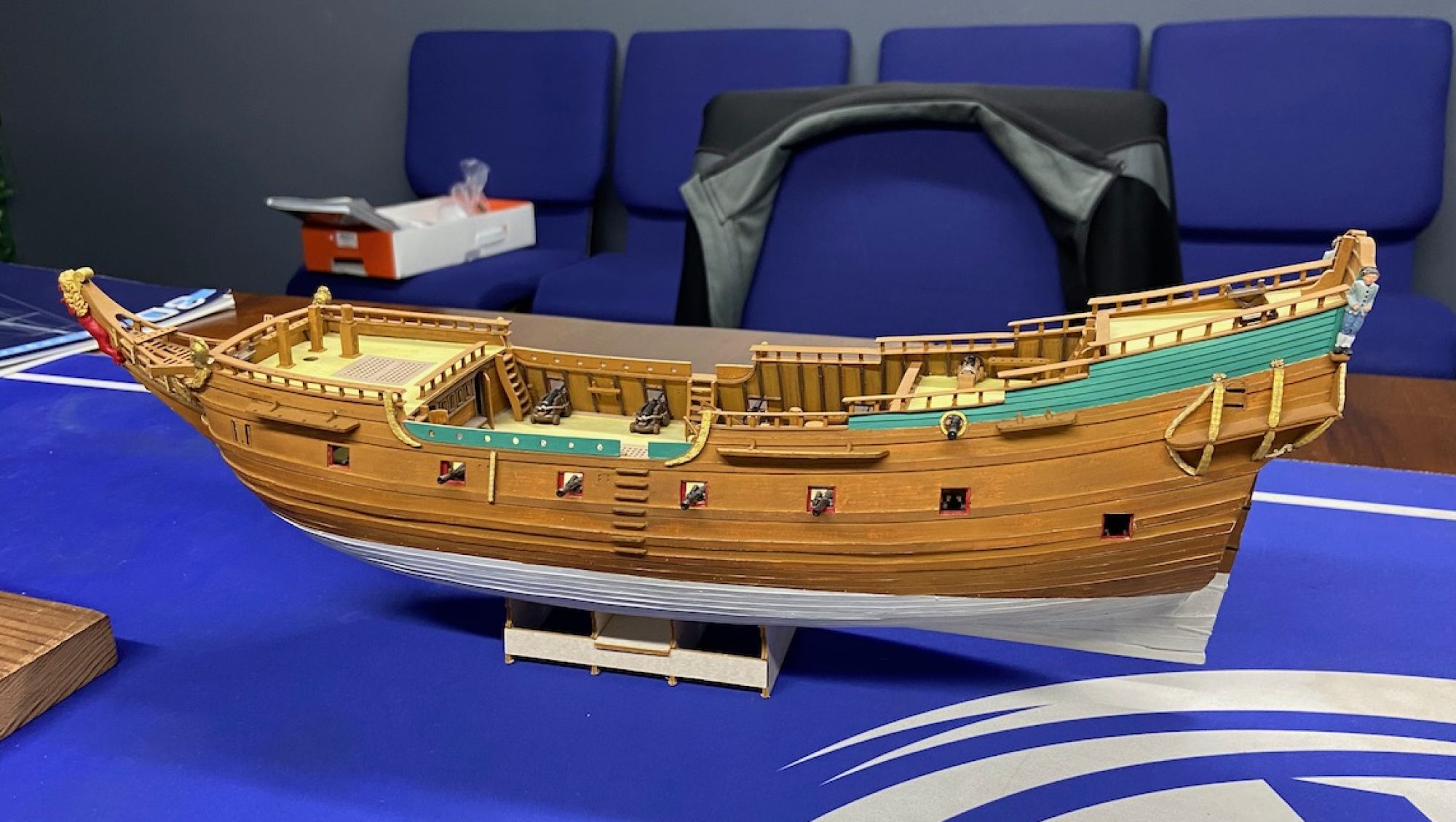
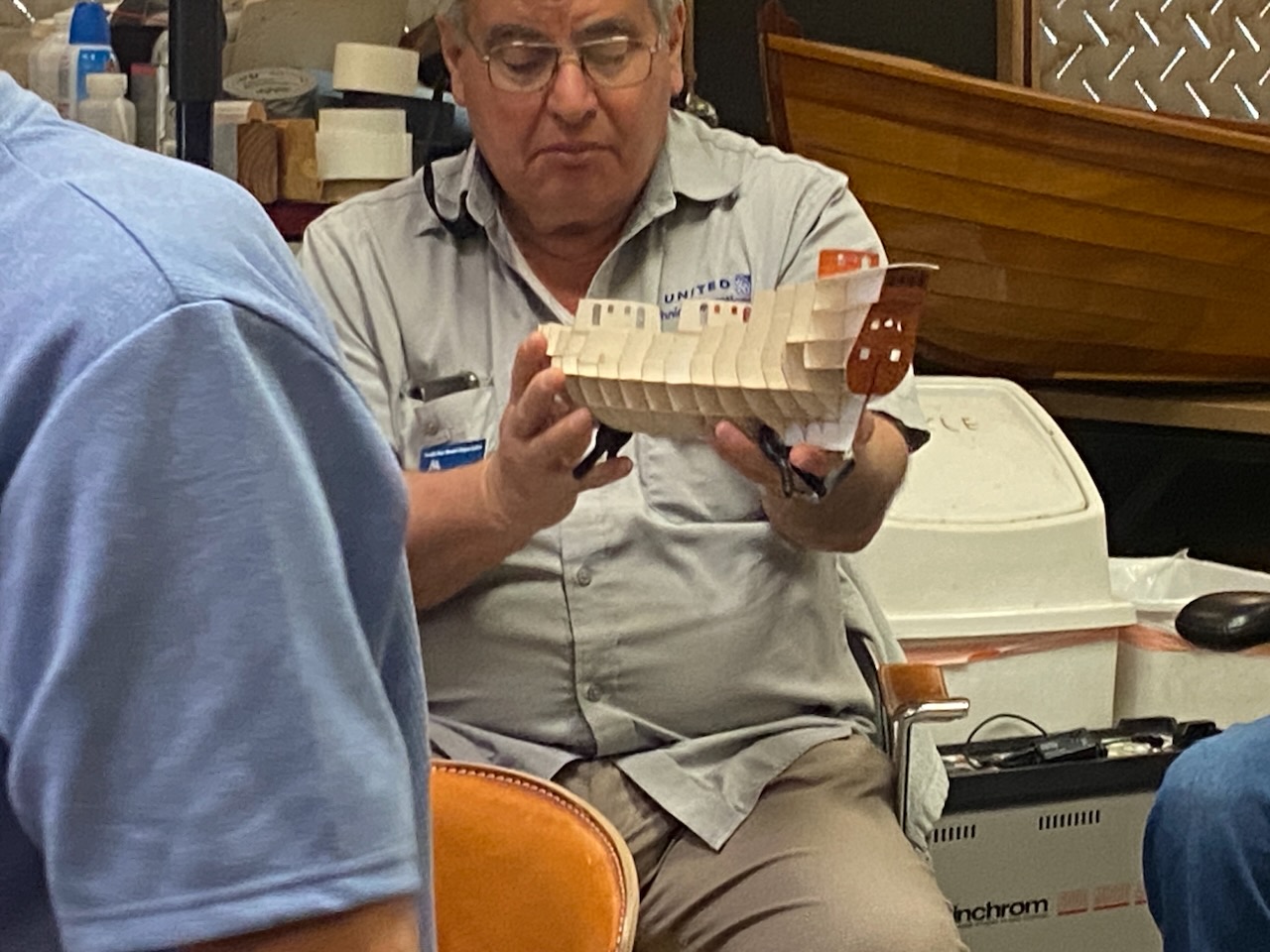
Member George Sloup brought in his paper model of the English galleon Revenge, a 1/96-scale kit from the Polish paper model publisher Shipyard. The Revenge was a heavily armed “race-built” galleon built in 1577, and captained by, among others, Sir Francis Drake. She was probably best known for her participation in a fleet action against the Spanish Armada, which ended the threat of an invasion of England by Spain.
Member Jacob Cohn brought in his current wooden ship model project, the French naval cutter Le Cerf. The 1/72 scale model is being constructed from a kit by Dusek of the Czech Republic. Le Cerf was a French 18-gun cutter, launched in 1779, and sailed with a squadron lead by John Paul Jones and the Bonhomme Richard in operations along the English coast.
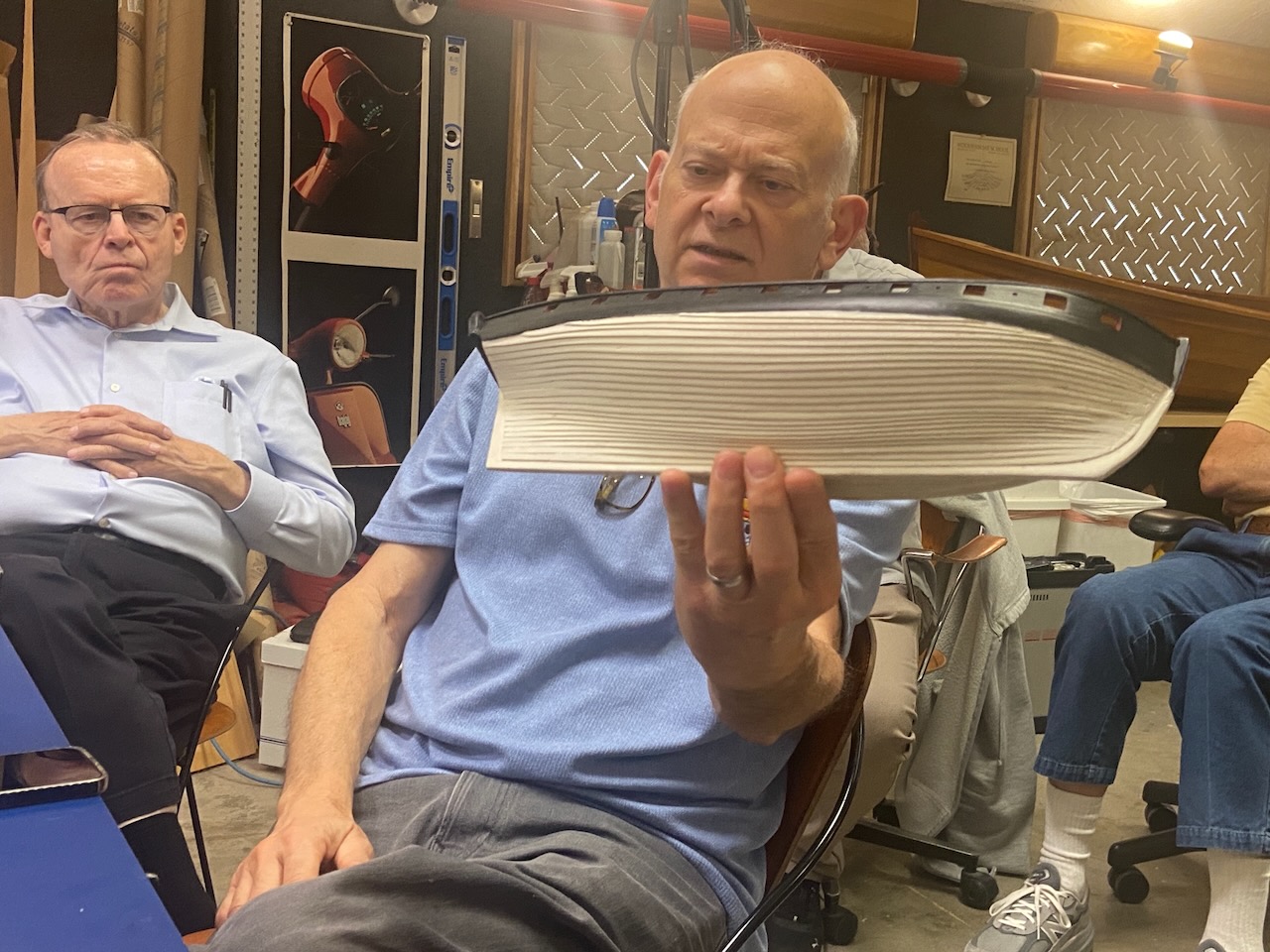
The kit features many laser-cut parts, including the lapstrake planks for the hull’s outer planking layer. As with several of the newer manufacturers, the deck comes with deck planking pre-scribed. This is particularly useful, as the planks show the pattern of a “sprung” deck – that is, a deck whose planks follow the curvature of the bulwarks.
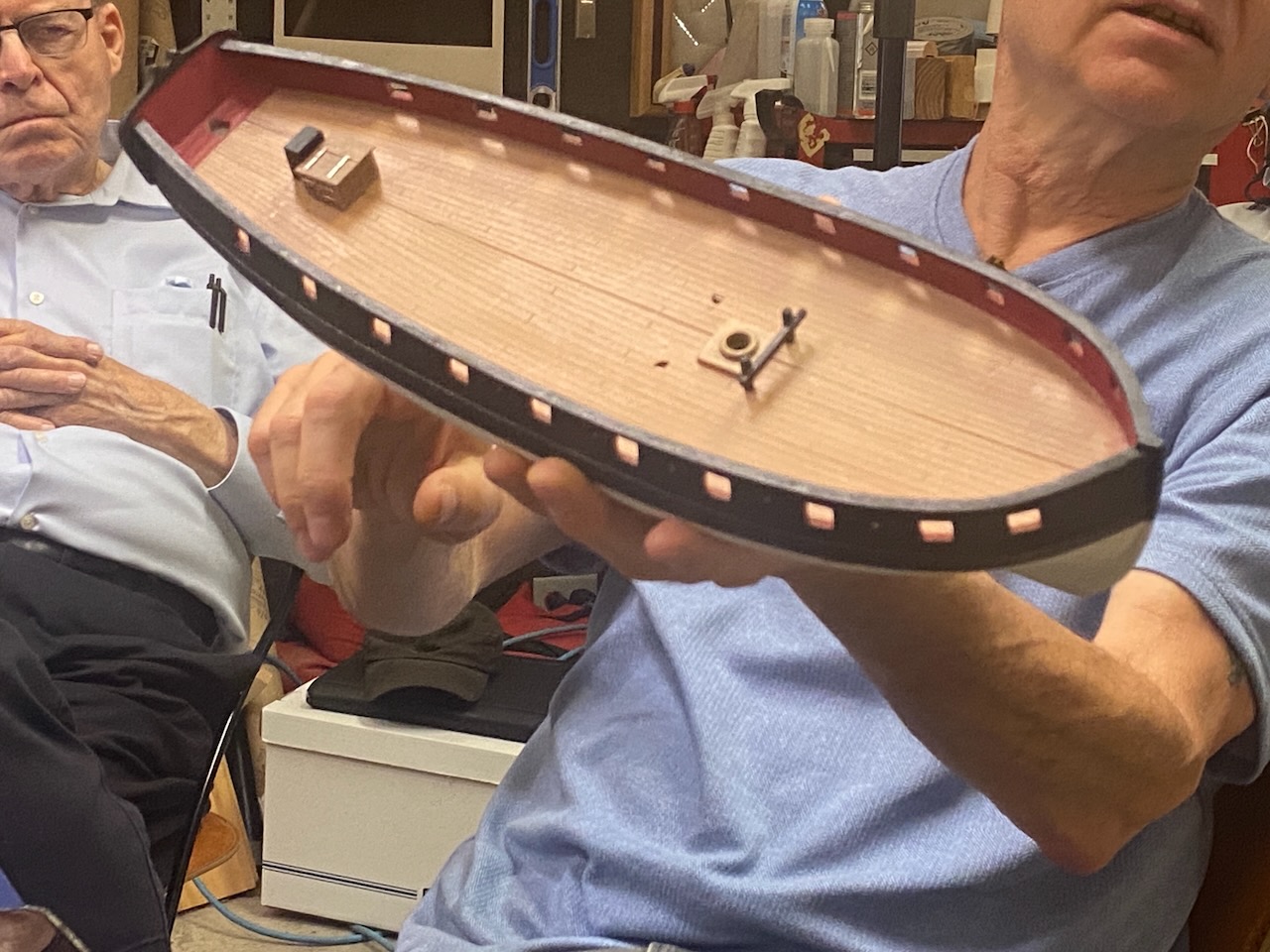
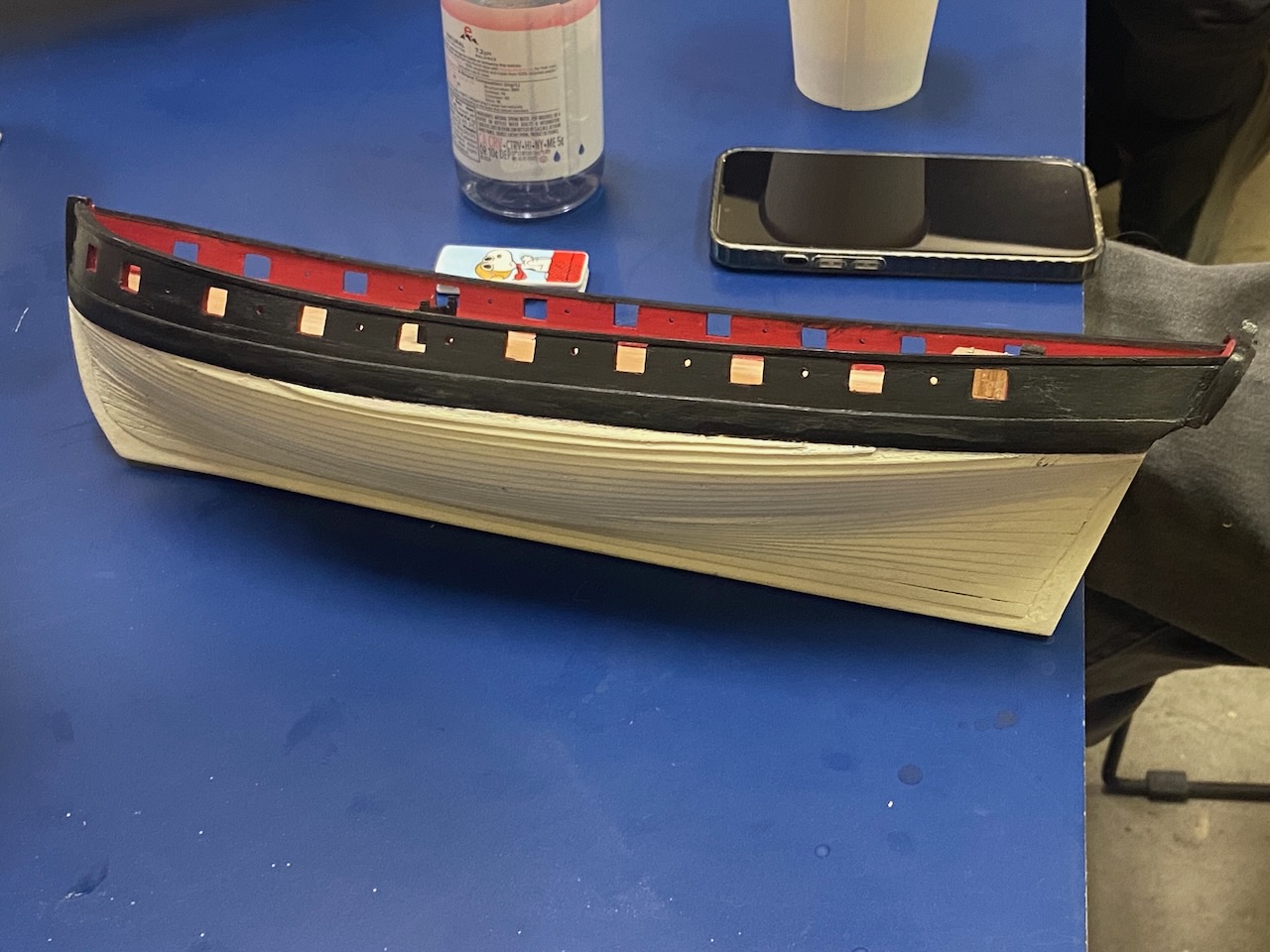
Jacob has completed the hull planking, including the lapstraked planking, completed the deck, and looks about ready to fit out the ship!
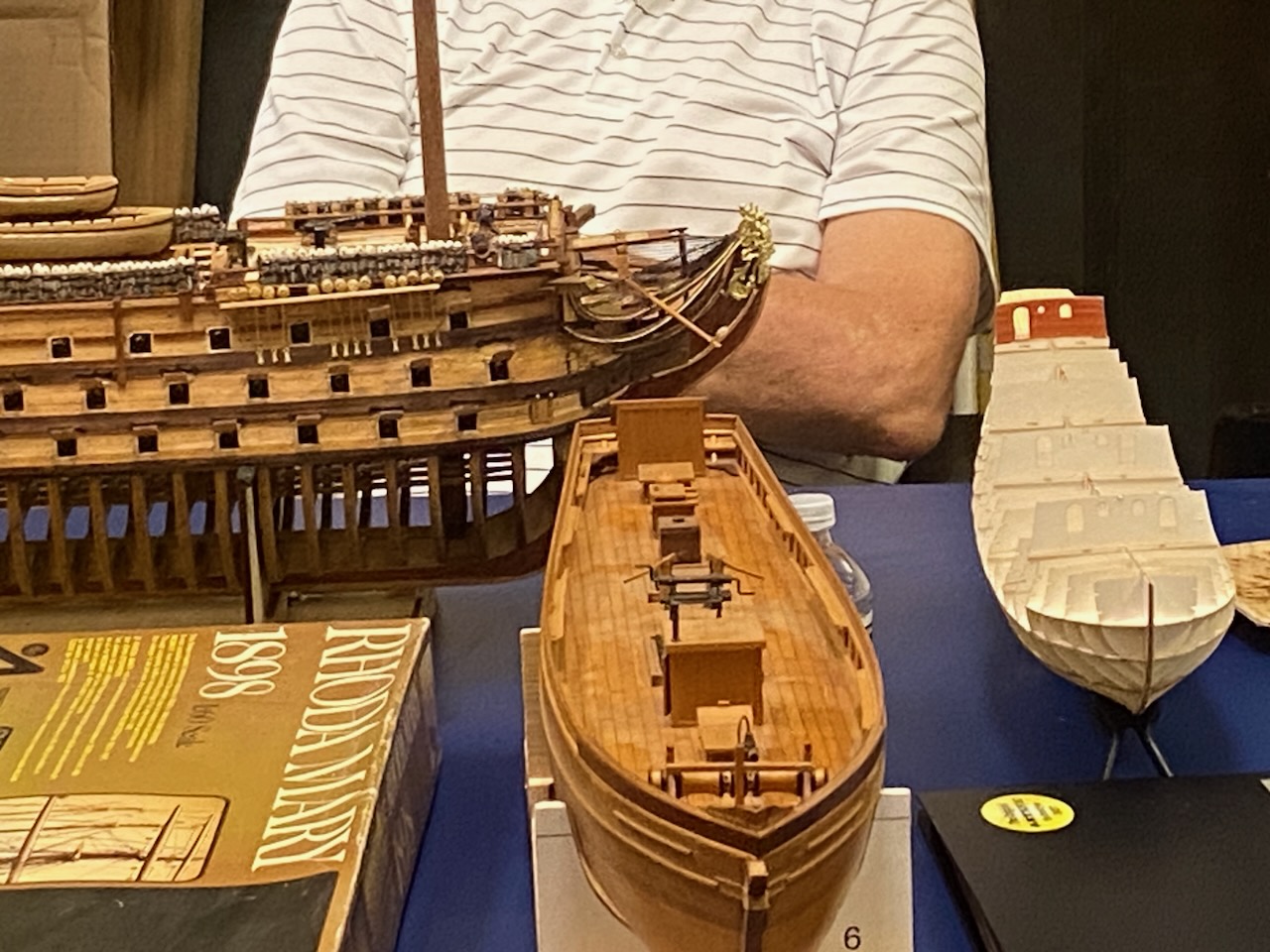
Member Dave Monley, who hosted our meeting, brought out a model that he had been building many years ago. He brought it out of storage and cleaned it up, to hopefully take up and continue to completion. His model is an old Artesania Latina kit of the 3-masted schooner Rhoda Mary, of 1898.
The kit comes from the era when Artesania Latina kits included printed plan sheets, limited printed instructions, and a very nice supply of very nice finish planking. The model is built at 1/60 scale and is very nicely finished, and the deck details appear to be complete.
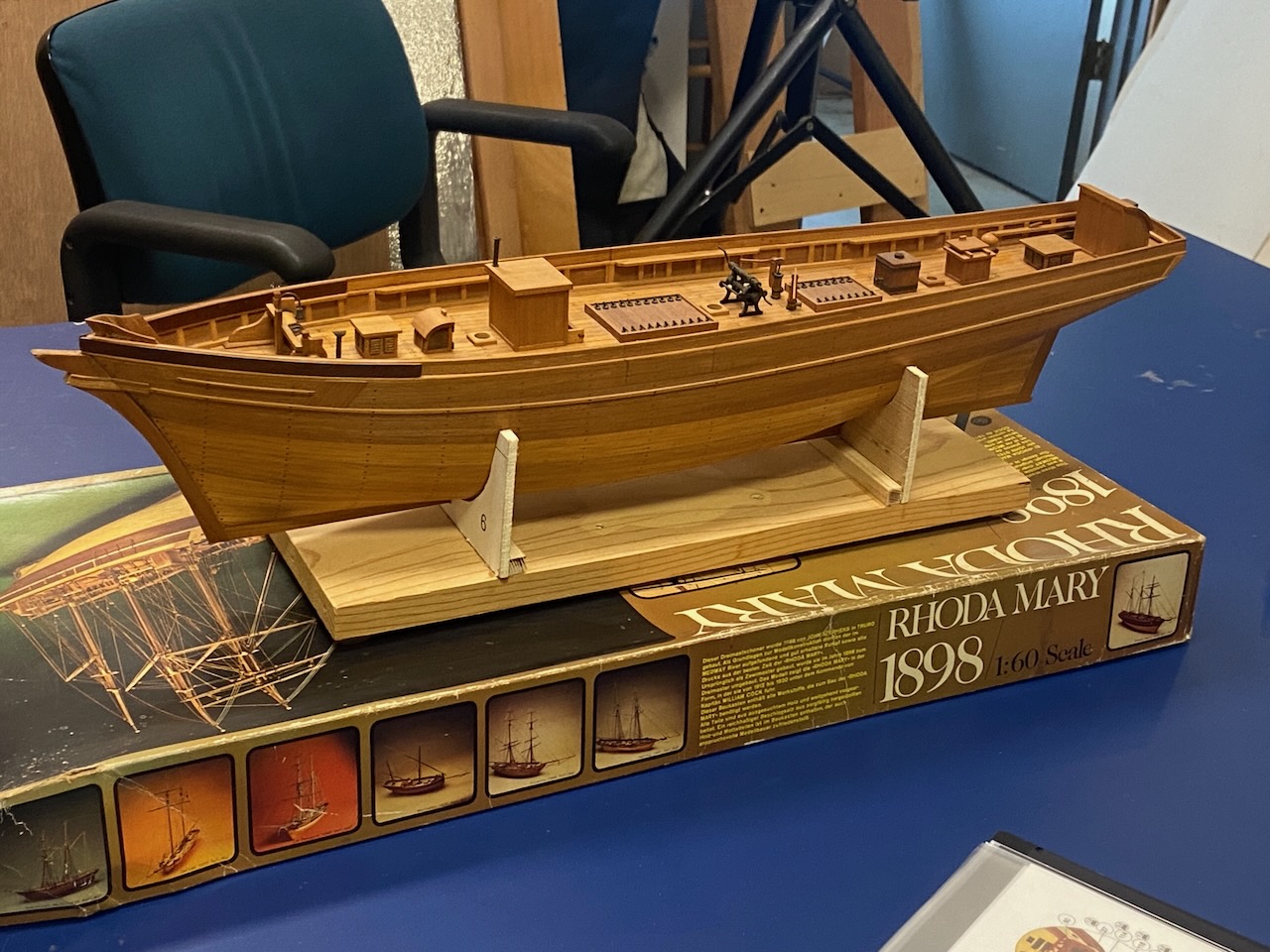
Will it stay on display in this form? Or will the build continue with masting and rigging? We’ll have to wait and see…
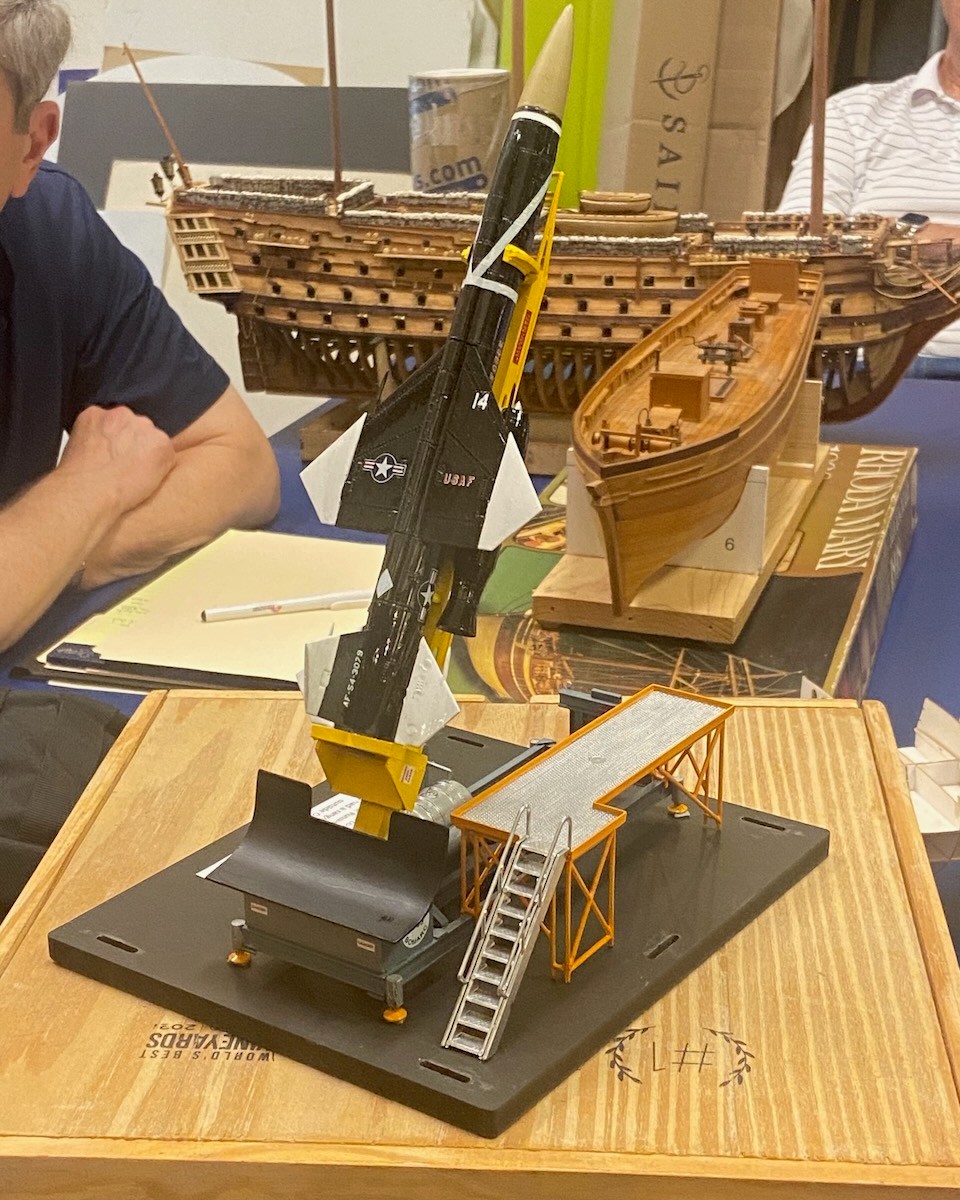
In the meantime, we have an interesting non-ship model from member and past-president Jim Tortoricci, who recently built this interesting plastic model kit of a Cold War era anti-aircraft missile from the late 1950s. These missiles, operating from 8 bases in the US and 2 in Canada, were long-range anti-aircraft missiles, designed to defend the continent from long-range Soviet bombers. These mostly fired from “coffin” launchers, and each was capable of carrying a 10KT nuclear warhead,
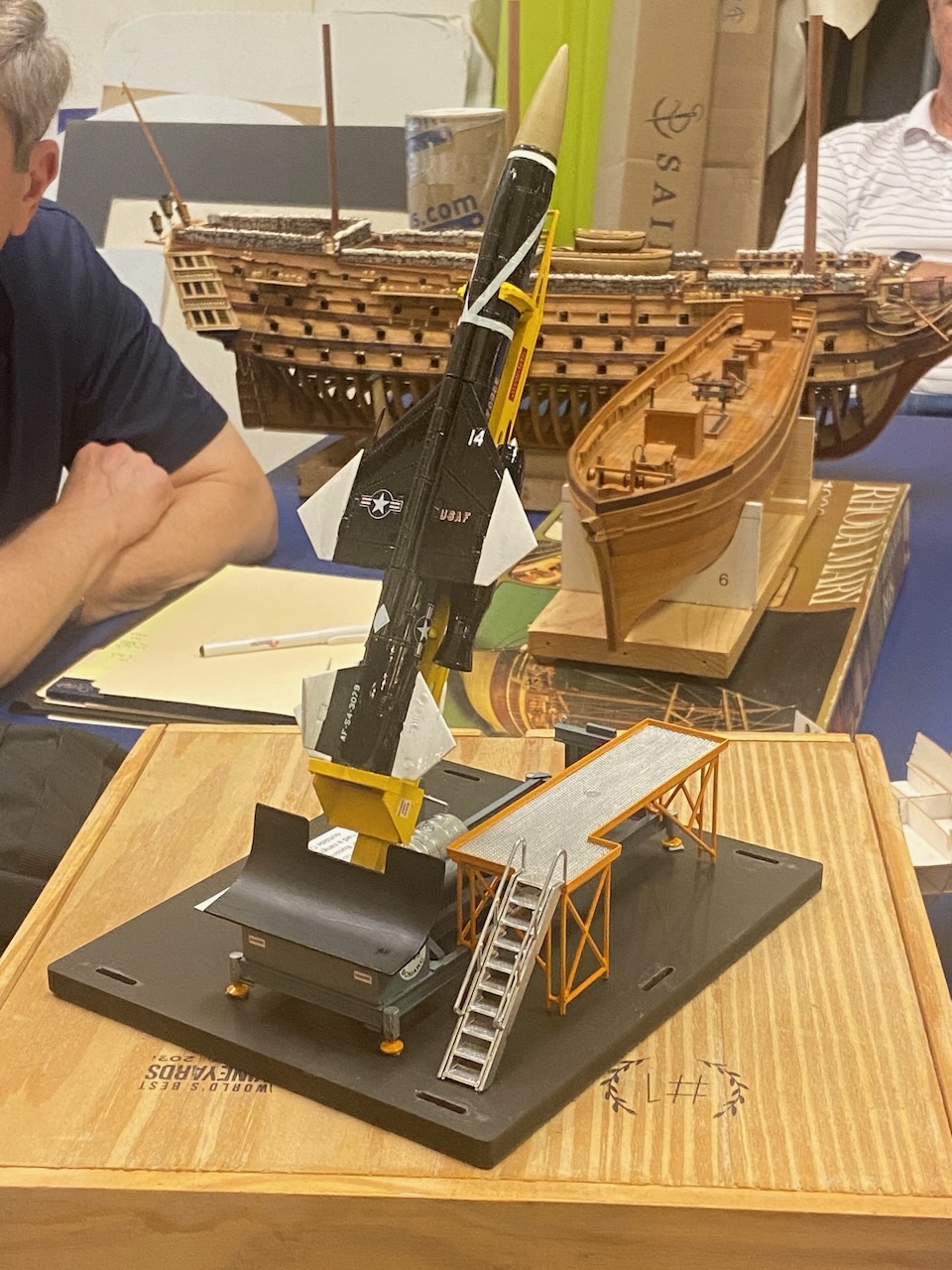
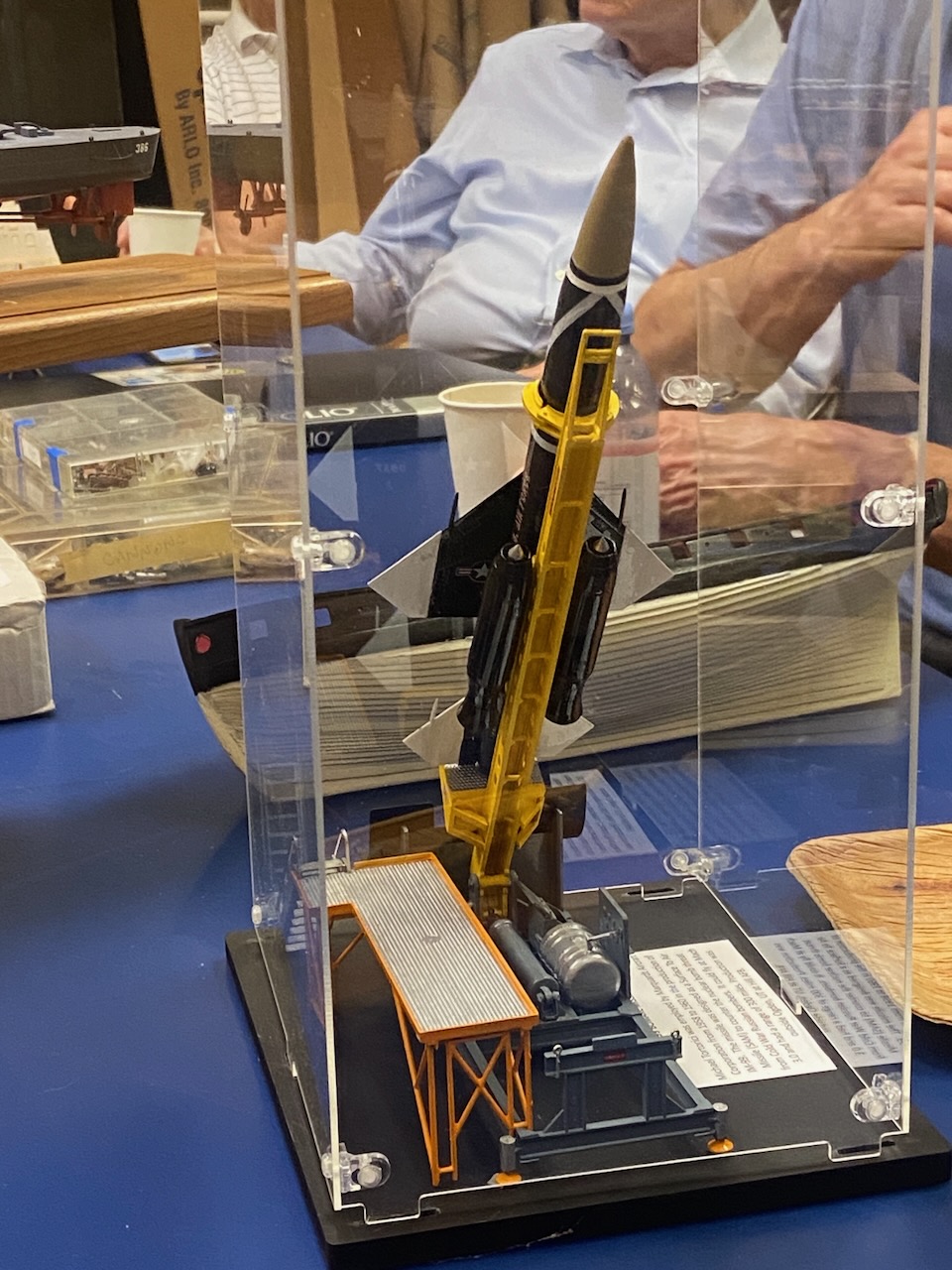
Jim discussed his discovery of how much model paint formulas have changed over the years, and lamented the fact that a trusted brand would simply not dry, forcing him to strip off the paint and use a modern acrylic brand. But, in the end, it looks like he had some very good results.
Jim also reported on his ongoing work on the USS Constitution cross-section model, based on the Model Shipways kit. He last reported using a tool called a Rat-Liner to rig the lower shrouds on the model. This meeting, he reported that he had a lot of trouble using the pre-rigged shrouds on the model, and that he doesn’t plan to use such a tool in the future.
The meeting was clearly a success and there was a lot of great discussion, and a lot more was talked about that didn’t make it into this post. So, those who are interested in more discussion should consider joining us. Below are a couple links for those interested:
Join us using the form here: https://sbmodelships.com/membership/
Or email us using the contact form here: https://sbmodelships.com/contact/
Ω
